- Jun 24
How should I structure a strength training session?
- Frances Brown
- 0 comments
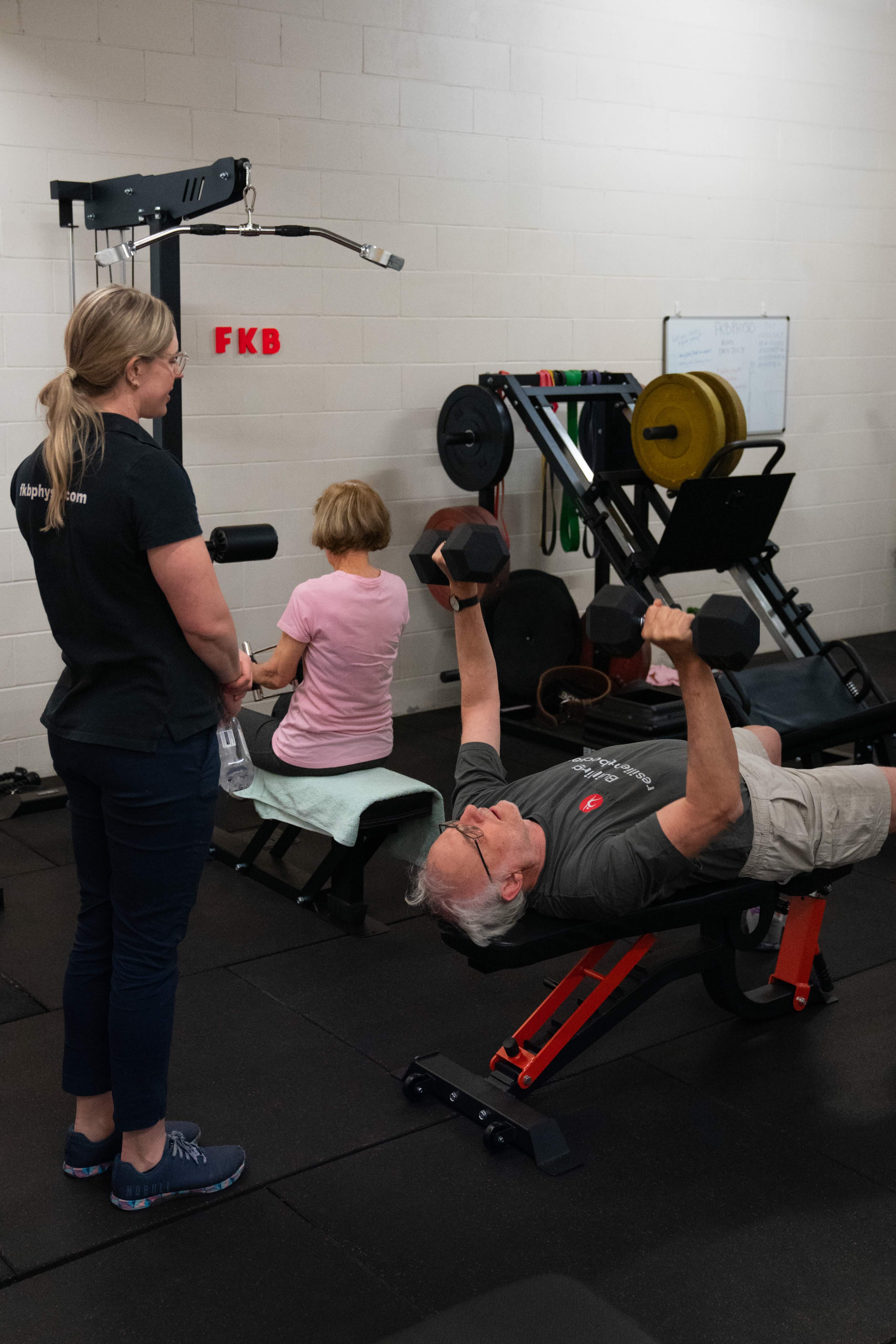
Wanting to start strength training but not sure where to begin? Here's a simple breakdown of what a well-structured workout looks like and why.
Compound vs Isolated Exercises
Most strength workouts include a mix of compound and isolated exercises.
Compound exercises use multiple muscle groups at once (e.g. squats, deadlifts, bench press). Because they require the most energy, coordination and technique, they're best performed early in the workout while you're fresh. These are often referred to as your main lifts.
After your main lifts, it's time to move onto less demanding compound exercises, such as a leg press or machine-based movement, like the row or lat pulldown. These still train multiple muscles but provide more support, making them less technically challenging.
To save time, these exercises can often be paired together. For example, an upper-body exercise with a lower-body exercise, so one area can recover while the other works (Lat pulldown + lunge superset, for example).
Towards the end of the session, isolated exercises such as bicep curls can be added. These target a single muscle group, require less technical focus, and are generally less fatiguing overall. In our classes, this is often when we include core and impact exercises, as these can be performed effectively even when you're a little tired.
Rest breaks
Rest breaks allow your muscles to recover enough to maintain the quality of your lifting.
The rest is not about your breathing or heart rate, it's about being able to rest adequately to enable you to progressively lift heavier weights with time.
When lifting with an appropriate level of effort (around 2 reps in reserve, i.e. you could only do 2 more repetitions at the chosen weight for the prescribed reps), you shouldn't be able to immediately repeat the same set again without a drop in performance. The heavier the lift, the longer the rest period required.
For very heavy lifting, you may need to rest up to 5 minutes between sets. In our FKB programs, where we don't train at maximal intensities, most people only need around 2–3 minutes.
Rather than standing around waiting, we often pair a lighter accessory exercise with a main lift. This keeps sessions efficient and engaging without significantly affecting performance on the primary exercise.
What to Include in Each Workout
If you're training 1–3 times per week, full-body workouts are usually the best option. This allows you to practise the most important movement patterns multiple times each week.
A balanced full-body session should include:
Squat
Hinge (e.g. deadlift variation)
Split squat or lunge
Upper-body vertical push (e.g. overhead press)
Upper-body vertical pull (e.g. lat pulldown)
Upper-body horizontal push (e.g. chest press, push up)
Upper-body horizontal pull (e.g. seated row, bench row)
Core work
Calf work
Ideally, each of these movement patterns should be trained more than once per week.
If you're training more frequently, you may prefer to split your training into upper- and lower-body days. The best approach is the one that allows you to recover well and maintain good performance from session to session. Some experimentation is often needed to find what works best for you.
If you're brand new to strength training, try our foundation program. It will teach you the basics of how to get started with strength training from home.
If you're comfortable in the gym but aren't sure how to structure your workout, our build program (launching in a couple of months) is for you.
In the mean time, you can book in to see one of us online or in person to design you a tailored strength program to get started.